When Alcohol is a Reward with Anne and Leigh Walkup
episode #285
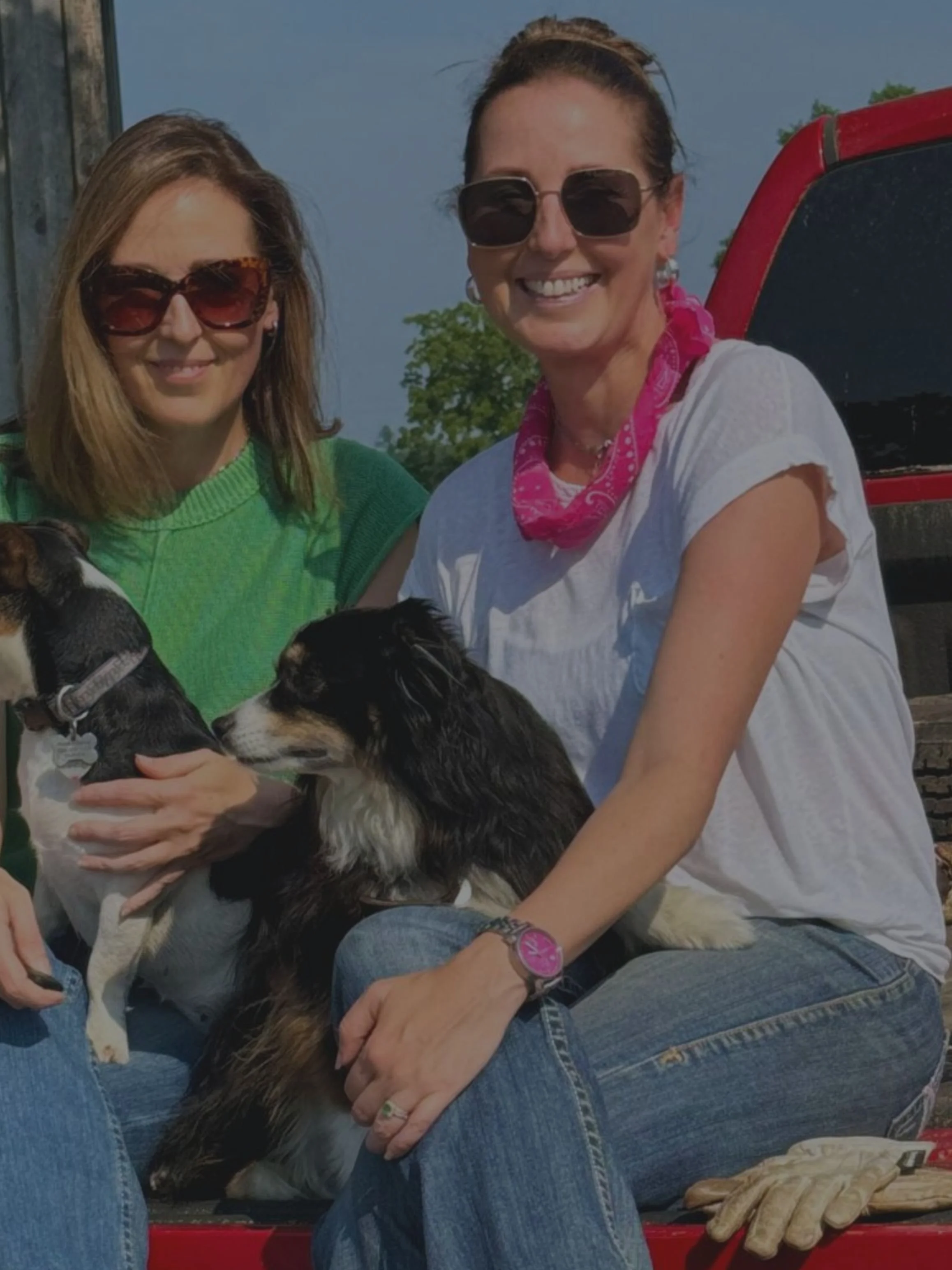
In this episode, my friends Leigh and Anne Walkup join me to discuss reward behavior and how it can harm women who drink.
They speak about their experiences with rewarding their harmful behavior and how they have found the true rewards of life since they quit drinking.
Leigh and Anne are the amazing women behind Front Porch Life Magazine and the Founders of Retro Rodeo Publishing, and yes, they’re twins!
Since these gals quit drinking in 2016, they have been on a journey of growth and have been incredible in sharing that journey with women like you.
In this episode, you’ll hear:
What reward behavior can look like, and how we often look for reasons to give ourselves rewards.
How rewarding yourself with alcohol can easily become a negative habit.
What Anne and Leigh feel the biggest risk of drinking really is.
Finding activities that are rewarding for you beyond drinking.
How to focus on the joy you’re adding to your life by quitting drinking, rather than the false joy you’re taking away.
Resources mentioned:
-
Hello, girls. Hello. Welcome back to the podcast. I want to say this is the fifth time.
And I have to say, I get so much great feedback, and I’m not just saying this because I hear from so many women that they appreciate your honesty. They appreciate the simplicity of how you approach life, actually. And then, of course, sobriety, and just the realness of it. The authentic vibes that we get from the Walcott twins.
We love it. We’re honored to be on it.
And I just thought of this as I do this every time I’m going to introduce you by name, and then we can get your voice, and I’ll try to remember to call you by name. Okay. But you can talk whenever you want.
Hi, Ann.
Hello, Lori. Nice to be here.
Hi, Lee.
Hi, Lori. Nice to be here.
There’s a little bit of a difference. Yeah. Okay.
So our topic today, I really want to talk about alcohol as a reward, drinking as a reward. The risks versus the rewards. We’re going to get into this conversation because I don’t know about you gals. And if you’re listening to this, when I was drinking, I would say probably, I don’t know, in the 30 years that I drank, maybe thousands of times, I deserve a drink.
I deserve a drink. That was my reward.
It did not start out that way. Of course, at 14 years old, it didn’t start out that way. And I hear from so many women that I work with, it is a reward. And especially lately, I’ve been hearing it more and more. This is my treat. This is something that I do for myself.
And I believe, and we’re going to talk about this, the risk that comes with using alcohol as a reward is heavy. It gets heavier. And over time, it’s going to get heavier and heavier.
So I want to ask you girls, and we’ll start with you. What do you think of when you hear the word reward?
I think that when you get into a routine of giving yourself a reward for everyday behavior, you can come up with any idea of a reward at the end of the day. And it’s easy to do. Once you start doing reward behavior that way, you can come up with any reason to have a reward.
And that’s what I did with drinking, eventually.
Lee, what do you think of when you hear the word?
Well, I mean, I think that we kind of live in a society where rewards are overdone. And I think whenever you make a reward a habit, that’s definitely not a good thing.
And if you’re trying to justify something in your life with a reward, you’d ask yourself, what is the justification here? Why do I need this reward?
Because people tend to get into a situation where they feel like they deserve it, they need it, and I don’t know that that’s really the thought process that we need to have around rewards in our life. That shouldn’t be a driving force for our everyday things.
Rewards are supposed to be special, but when you get into it with a drinking habit, which we all have, because that’s why we’re here, it becomes a habit just like anything else. It becomes a justification system more than anything.
Yeah, definitely. I mean, literally, I just think of a reward like it’s something that you get for something that you do, right? It’s something that you, you are achieving something, right?
Like back when we were kids, yeah, rewards, all of those things. It’s like, what am I going to get rewarded with for being good? Or what am I going to get rewarded with for doing all of my chores or whatever? It comes from that.
But what else? Why do you think that women especially are using alcohol as a reward?
Gosh, that’s a good question.
I think it’s programmed in the message of alcohol. I think it’s programmed in the culture of alcohol. I mean, any messaging, you can look at the mommy culture with a glass of wine as your reward for being a mom. I think it all breaks down into the culture of marketing, and the marketing of alcohol.
What alcohol brings into our life, or what it’s actually supposed to bring into our life. It’s a celebratory thing. People use it to celebrate. People use it when they have a horrible day. And that is a marketing tactic that people have completely fallen into.
Myself included. Absolutely. I mean, it’s a lie that the alcohol industry uses in order to get you to continue to purchase it.
Yeah. Mm hmm.
It’s such a rewarding experience, what they portray. Yes, like the whole experience. When you talk about romanticizing alcohol, you get this vision of the reward of it all, right?
And of course, alcohol, once you have it, it doesn’t even matter how much you have. You don’t have to drink for 30 years like me. Once you get that first hit, this was rewarding. Then our brain just rewires and it’s like, give me that again. Yeah, give me that again.
And then, of course, our tolerance is built up and we get to the point where it’s not that rewarding anymore, right? And that’s where I think so many of us are in midlife. That’s where I was. I felt flat. The more I drank, the less I got from it.
I was always chasing that rewarding feeling, that rewarding experience that maybe I got, for sure, at 14 when I started, but not at 45. Not at 42. I was not getting that rewarding experience.
So at the end of the day, you’ve got to look at it and go, well, what is so rewarding about drinking?
No. No. I agree.
Reward, I feel like it cannot be called a reward when it takes something away from you. I mean, after a while, the reward is taking something away from your life, so it’s no longer a reward.
No. I mean, it’s almost, it’s a penalty.
Absolutely. The reward is replacing that negative behavior with something that actually is rewarding you in a healthy way, not in a negative way.
I think that we all had that misconception when we started drinking that, yeah, it was fun, like you said, and we all were having a good time. But not later on. You think because you’ve been programmed to continue to think that, but the reward never comes.
No. Yeah, it just doesn’t.
I want to ask you, remind us of your sobriety date.
June 7. June 7, 2016.
Okay. Yeah. It wasn’t six years.
And congratulations, of course. Congratulations. That’s huge. I love it whenever I ask you that on a podcast. I think the more and more podcasts we do together, it’s like you both look at each other and there’s a pause like, what? What’s that date again? You know how it goes. We know how that goes.
When did you start drinking?
We were 18. Yeah, 18.
What year was that?
A full 20 years. Yeah, 20 years.
Yeah. So when you started drinking, Lee, let me ask you, when you started drinking, was it the reward that you were seeking?
Yeah. I mean, I think it was the reward of fitting in, being a part of something. I mean, it was the cool thing to do.
And I’ve been around people that are older than me that were diehard smokers, and they said that when they started smoking, it was the cool thing to do and glamorized, people smoking in movies. And that’s kind of what it was with drinking.
I mean, we’ve spoken about this before. We come from a very heavy drinking family and it was totally acceptable to drink. It was a culture, in the South, Southern, all of that jazz.
But for me, it was all about the cool club. It was fitting in and being a part of something. And that was the reward, was that, okay, I fit in. I’m drinking with the cool group. So that was the reward.
Totally. Yeah, absolutely.
And do you feel the same way?
Yes, because I remember feeling like that. I don’t think we were ever outcasts, but we were known as like, oh, we don’t do that. They’re good. They don’t drink. They don’t smoke. They don’t do those things.
And then it was like, you wanted to be a part of the people that did that. And then so you started drinking occasionally, and then we went to college and it was just like game on because everybody, it’s that first taste of freedom. And you want to drink, you want to have fun, and you want to be rewarded by being invited to the parties, being a part of the culture, being in the cool group.
And that’s the way it starts. It’s not the way it ends.
Yeah. Yeah.
You brought up such a good point there too. And I don’t think you really said it, but what I heard was like this rebellious side for so many women who have always done good.
I’ve heard this as well from women throughout the years. This is my thing. This is my thing. We have to have a thing. We have to have a vice, right?
Yes. And I think the wine culture, which we were never involved in so much, but I think the wine culture gives a certain person the right to be like, okay, it’s okay. I’m going to do this. I’m going to be part of the wine community.
I’m going to be the cool people that come with the bottle of wine. It’s expensive. Like there’s a part of that. There’s a part of being a part of that club. Yeah.
Just like there’s the bourbon, like it’s just, it’s all romanticized or it’s a luxury, or it’s the intellectual side of the drinkers. I mean, there’s all different parts of it and you can put yourself in.
Yeah. The party club that stays up till 5:30 in the morning, the whatever. But there’s always a reason.
And most of the time, I mean, even as we’ve talked to people that were heavy drinkers, it was anxiety. They wanted to fit in and they were maybe backwards and quiet and socially awkward a little bit, and drinking gave them that edge to be able to be included and not be on the outside of the group, but actually be a part of it.
There’s always a reason to start picking up the alcohol. There’s always a reason.
Yeah, now we’ve got to find the reason to put it down.
Definitely.
I feel like that rebellious side and what I’ve experienced with coaching is women are now using alcohol later in life. They raise their kids. A lot of them, they’ve always been that good employee, that good whatever. We’re checking off these boxes like we’re good, we’re good, we’re good.
And like you guys said, oh, Leigh and Ann, they don’t do that kind of stuff. They’re good girls, right? And we have this label that we carry around with us. Doesn’t matter what age you are.
And women start drinking later in life. They didn’t start out at 14. A lot of women started in their forties, their fifties, on up. Because it’s like, now my kids are gone. Or now maybe I’m going through something really tragic in my life and it’s really hard to cope with it. Let me turn to alcohol.
And then it becomes this reward, this thing that we do, this vice, if you want to look at it like that.
And so, yeah, I feel like that is happening a lot at midlife and beyond, for sure.
Yeah. Yes. Yeah. Yeah. Yeah.
How do you feel about having a vice? Do you think it’s needed?
Ann?
I think there’s negative vices and there’s positive vices. I think any of them can be detrimental. I mean, I think that when we quit drinking, we had to create something else that was a focal point, whether you call it a vice.
But I mean, some people that are not extremely healthy, they’d be like, oh, they’re over the top with that, whatever. I think there’s both levels, but negative vices add up very quickly.
Yeah.
What would be a positive vice? I’m thinking about it now more like, let’s switch the episode to vices. No.
What is a vice, really? Let’s start there with the basics.
Yeah, I don’t know. I like vices though.
But I mean, for me, vice is like, a vice becomes tied into your identity. Like a vice is something that becomes a part of you. That becomes a daily or a weekly ritual that almost turns and morphs itself into a part of your identity, right?
Just because you pick up a drink a couple of times doesn’t make you a drinker. But once it starts becoming a vice and something that you reach toward constantly, then you start becoming that. That identity becomes, well, Lee, she’s a partier.
It’s a practice. It’s a habit. And then it becomes part of your identity, which you can switch. To now the vice is I’m running four days a week and I’m going to bed at nine o’clock instead of 2:30 in the morning. And that becomes more of like a healthy vice. And so then instead of which I hear all the virtue.
Okay. So then that vice becomes maybe positive virtue, where I identify more with a healthy person instead of, yeah, the party or the toxic habits.
Yeah, I don’t know. I feel like that’s part of your identity, and you can change your identity over time. Because identity to me is what you tell yourself every day. So you can change who you are, and you can change your identity and how you see things.
100%.
Oh, yeah. And thanks for looking that up and virtue because we’re never too old to learn these things, right? We’re talking about this, what is the vice?
Because I feel like it’s almost like an out. Like if I said something like, well, I do good in so many areas of my life. I have to have a vice. Bullshit. You don’t.
But what is the vice? Is it a negative vice? Is it dragging you down? Is it drinking or is it something else?
Yeah, I get that. And thank you for mentioning that as well. Our identity as drinkers, whether you’ve drank for 30 years or you drank for six months or something, if you identify with, well, now I am known by myself and others as a drinker, of course that drinking is going to be the reward.
So much of it is the reward.
Yeah, the identity crisis. There’s so much there. But you can’t get out of that. You cannot find other rewards in life while you’re drinking, if you’re going to look at alcohol as a reward.
Oh, definitely. Yeah.
Did you notice over time, like maybe let’s say in your thirties, that that reward was starting to shift into something else? And was it more of like a coping mechanism, alcohol?
100%. 100%.
I think you convince yourself, like I said earlier, that you can come up with a reason for the reward. You can come up with a completely bullshit excuse on your way home from work why you need to stop at the liquor store.
That, oh, I got through the day without getting in an argument with my boss. Woo hoo. Win win.
It’s like, well, you’re supposed to get through the damn day without having an argument with your boss. That’s not a reason to stop and get something to drink. But you can always come up with one.
I mean, it’s not hard to do.
Oh, yeah.
But then that becomes the negative. Yeah. And then it’s no longer a reward. I mean, you’re hurting yourself every day.
Yeah. Yeah.
You’re choosing the bad habit, but you’re claiming it different in your mind because you can justify anything.
Yeah. I mean, if somebody wants to drink, use, smoke, do anything negatively that is harming themselves, that becomes this horrible habit. You become a pro at justifying.
And the only person you need to justify it to is yourself. So that’s how that works. Like you don’t have to justify it to your husband because, well, they don’t get it. Who gives a shit.
But if I can make it right in my mind, then it’s fine. And that’s when you realize that when you’re trying to convince yourself, there’s an issue. It’s gone over to the wrong side. Things are not in balance.
And then the rewind.
Absolutely. I’m starting to convince myself of the positive things to add. That’s the hard part.
Yeah. That’s the hard part.
Yeah, it’s almost like, and I feel like if somebody is listening to this and they’re thinking, well, I don’t use alcohol as a reward, you’ve got to take a break from drinking or quit drinking before you can really identify that, 100%, right?
Yeah. Yes. It’s not.
And so I think it’s important to be able to easily stop today and not drink for two months and not have a problem.
Yeah, like I wouldn’t have said I was still drinking in my 40s as a reward, but I think the signs, and we’ve kind of mentioned this, the signs of when it goes from reward to using it as a coping mechanism or something else, there’s so many different signs.
But if you’re telling yourself, it’s just this one. Yeah. Right.
Or if you’re really trying to work on being alcohol free, and then it becomes like, well, it’s just this one. I need it because I deserve it because I had a tough, stressful day.
It’s like, what do I need this reward for?
It’s kind of fuzzy to even identify it until you stop drinking. And then you realize, oh, when I sat down at the end of the day on the couch to watch my favorite program, because that’s what so many women do, I did it, that’s my treat, that’s my reward.
And then you sit there without a glass of wine and you’re like, I’m missing out. I don’t have that reward anymore. So now my life is not rewarding. I do not have anything to reward myself with.
And it is, I love everybody listening to this, it’s just BS. It’s BS. It’s BS.
Yeah. Yes.
There’s no judgment in believing that. It’s totally normal. But if you’re going to continue to reward yourself with drinking alcohol, you’re not going to find the real rewards of life.
And most of them are very simple things.
Oh, 100%.
Well, and I mean, like we talked about earlier today, when did it become an acceptable thing for you individually to reward yourself with something that’s harmful, and like legitimately question that. Why?
And in your mind, I’m sure you’re like, what’s one glass of wine? What’s one beer? Right. Okay. What is one?
Well, that’s fine. Well, if it’s just that, then why do you need it?
I mean, think about why you’re going to reward yourself with something that is going to do you harm when you can reward yourself with something that is going to do something positive in your life.
Yeah. Mm hmm.
And that’s like James Corden. And I saw Unreal talking about that when he quit drinking. He said, how much of tomorrow am I willing to give up?
And that was like so smart. He’s like, if I’m going to drink tonight, am I going to give up till noon tomorrow? Am I going to give up till three o’clock in the afternoon because I have to pay for it somewhere?
Yeah, I’m going to pay for it the next day. So are you really willing to take part of tomorrow for that two glasses of wine tonight that you don’t regret tomorrow?
Yeah, I love it. I love that reel. I saw it too, and I saved it to my phone, so I will link it in this episode for sure.
It was so moving, and I didn’t even know that he was somebody, I don’t know that much about him. James Corden, he’s what, an actor and a talk show host, right? Late night guy.
But talking about that, it’s like, what am I going to give up?
So it’s like looking at it like I deserve a drink because I’ve had a stressful day, or I deserve a drink because I’m feeling really good. Life is good. I want to drink.
A lot of us, we like drinking. I mean, there’s no shame in that. I liked drinking for a really long time, but it’s like, what am I giving up?
Do I really deserve waking up in the middle of the night in a panic and just regretting that decision?
Am I really deserving of not being able to be 100% focused and productive the following day?
And like James Corden said, how many hours is this one drink going to take away from me, was really the bottom line of that.
Yes.
Well, that’s like John Mayer. I mean, he’s been sober now and he said, it came to me and I thought to myself, how much of my potential am I willing to sacrifice to drink?
Because he’s like, I knew I would never reach my full potential with a cloudy mind from drinking. And he said that he went to a wedding or something, that he had a hangover for like six days. And he’s like, what am I doing? Like, this is absolutely ridiculous.
And like he said, there’s going to be that moment in your life when you decide to get rid of it. And for those 30 days, 60 days, hell, it could be a year, where you’re miserable. Where you’re like, this is so stupid. I’m bored to death. What do people do that don’t drink?
But once you get through that, your potential and your health and your mind and everything goes up a little bit more and a little bit more and a little bit more.
And you do not realize how good you can actually feel once you get this away from you. And that’s just the bottom line.
When you replace that reward with a healthy reward, your life will change dramatically.
Yeah. Yeah. Absolutely.
And what you just said, it was that like, I wish everybody who is starting out on this journey would allow themselves time.
And there’s never like this, oh, well by 100 days I should feel this way. No. You’ve got to keep going. If you don’t, you’ve got to keep going. Because that’s when the real rewards start to happen. And it’s next level.
Like I always felt like that after that one year milestone thing, shit, what can I do now? I know what’s next for me now. And I found that very rewarding.
Yeah.
And I really want to go back to maybe more talking about the risks, because we can look at it as, of course, we all know there’s so many risks to our mental or emotional or physical health by drinking alcohol, even a small amount of alcohol over time.
There’s risks in midlife. I always say in our heart and soul when we’re doing something that is not aligned with what we really want.
And if you’re here, I know that you want this for yourself. No matter where you are, you’re either interested in it, you’re challenged with it, you’re living alcohol free and you may not find it that rewarding yet.
But we’ve got to look at the risks and what we are really taking away. And like we just talked about, how many hours is it going to rob me of tomorrow? That’s a risk.
What are some other risks that you guys can think of?
I think that the biggest risk is never becoming who you really see yourself as because most people don’t sit around and see themselves as that person that sits on a bar stool.
There’s a vision there that you have for yourself, and until you put that intentional life behind it, you’re not going to reach it.
And drinking takes away your intention, 100%.
I just, following through, there’s just, when you make a decision about your life, and you just say, you know what, this is not who I want to be, and in the next breath I can decide who I really want to be, and start moving toward it, and live a life that you do what you say you’re going to do.
I mean, I don’t care if this person is like, I’m not going to drink tomorrow, and you do drink tomorrow, there is a level of guilt with that because you can’t hold yourself accountable.
And if you can’t hold yourself accountable, emotionally and mentally, the fatigue with that is unreal.
And so when you finally get to a point in your life where you can hold yourself accountable, you can believe in the things that you say about yourself and the things that you say that you’re going to do, your life is just on such a different road, just as soon as you make those decisions.
So it’s like, when you don’t ever come to that realization, that’s sad. I mean, you’ve got to be able to get there, and just hope and be proud of yourself.
And it’s hard to be proud of yourself when you can’t hold yourself accountable.
I mean, I remember when we were smoking, because we always smoked and drank at the same time, and there was never a time that we sat down to smoke that I didn’t light a cigarette and think, you’re going to end up with cancer. You’re absolutely killing yourself. Why do you keep smoking?
But when you get enough beer in you and you get on the fifth or sixth cigarette, those emotions go away.
So you wake up at three in the morning and you’re mad that you did that. And I always kept thinking, oh my God, I’m so tired of these thoughts, and you’re being so unhealthy and you’re abusing your body.
It’s amazing how quickly those thoughts go away when you quit those habits.
And the mental space that is freed up when you quit those habits, I mean, I think, like you said, what is the risk? The risk is not living a life that you envision yourself living, to your true potential.
That’s the biggest risk, the takeaway. The cancer and all the other health things are detrimental to your health if you continue down that path. But the biggest thing, the biggest risk is leaving this earth and not being the person that you wanted to be.
That’s the biggest risk in my mind.
I couldn’t have said it better myself, honestly.
Because that’s where we have to get to this point, especially as we get older as women, is to realize that this is not serving me. It’s not giving me any value in my life.
And I find that it is such a big risk of just missing out on everything that you guys just said.
I was thinking of the past 10 years of my sobriety, what I would have risked missing out on if I had continued drinking.
And so what would it be for you in the past eight years, Lee? What would you have missed out on?
My life would not be at all what it is today. I mean, I would not be running a successful publishing company. We would not have just bought a horse farm.
I would not have the successful marriage that I have or the relationships with my family that I have. I mean, my life would look completely different.
That is 100%. Absolutely.
And the friendships that we’ve been able to cultivate.
Yes.
And yeah, which we thought would be the hardest part of quitting drinking was, who are you going to hang out with? Who are you going to meet?
Well, when you remove that from your life, the people that are authentic, and these are the people that you always wanted to be around, will find their way into your life.
And we’ve been like, with Lori, a relationship with you. I mean, we’ve been very blessed to meet some amazing people that I feel like we never would have met had we been drinking.
And it’s amazing how you view your social circle totally different. I mean, before I couldn’t imagine not hanging out with drinkers, and now today it’s like I can’t imagine sitting around hanging out with drinkers.
Well, what you’ve learned about yourself. I thought I was an extrovert. Ha. I’m not. Turns out I’m not.
We tried so hard to be.
Oh God, the introverts unite.
It’s such a good point. That’s why I ask girls this question. It’s like we have to look at what we could be missing out on by drinking. We have to, we have to be able to get there, and it’s not easy to do.
So if you’re listening to this and you’re beating yourself up because you keep going back to the drink because you find it rewarding, I found it rewarding. Ann and Lee found it rewarding. It was rewarding.
Like let’s own this shit right now. It was rewarding.
But alcohol is one rewarding option and it really doesn’t lead to anything else except for you.
Yeah.
It’s just one thing. When you stop drinking, what I’m hearing from you girls and what I know from my experience is that you open the door to so many other rewarding experiences in life.
We would not be here. There’s no way I would have a podcast about sobriety and midlife if I was still drinking. I hope not, but you know. No, I wouldn’t. I wouldn’t be here.
And there’s so many things that have happened in my life over the past 10 years that I would have missed out on if I was still drinking.
But when I quit drinking, I thought I was going to miss out on everything because I wasn’t drinking anymore. And it just, again, it took me so much time to see the real rewards of life.
And then to always remind myself, because I’m not somebody who’s ever on the podcast or with anything I do like, there’s so many health risks. There’s so many things like you shouldn’t drink because that just makes us all feel like shit.
I wasn’t interested in that. I wasn’t searching like, what are the health risks of me drinking? I wasn’t doing any of that. I wasn’t looking at the risk because I just, I wasn’t there.
But if we continue to look at, well, we should be okay with quitting drinking because there are so many risks to it, health wise and stuff, I think that we’re risking out on giving ourselves the chance to just look at every single day, I’m going to choose to be alcohol free, and what I’m adding to my life as I go.
Yes. Yes. Yes. Yes. Yes.
I mean, what you add is so much and that’s where the focus needs to come.
Because if you focus totally on what you’re taking away, you’re going to be miserable, because that’s just human nature. You want what you can’t have.
Like that is just, you want what you know you can’t have. But if you focus on the things that you can have, the things that you can add to your life that are going to bring so much more happiness, that’s where the real change comes.
It’s not on this, damn it, why did I let myself get to this point where I can’t have alcohol. That’s not the way to look at it. It needs to be like, look at all the things that I can do now that I’m not hungover or too drunk to drive.
Too drunk to do whatever because I’ve already had three beers. I can’t go do this. I can’t go do that.
All the things that I can add to my life because I’ve given it up.
Absolutely.
And I think the reward, like we’re talking about, and the risk, I mean, when you change your way of thinking and you’re sitting there at seven o’clock at night being like, I want my glass of wine, which is probably going to turn into two, three, maybe a bottle of wine.
What about saying, how about I reward myself by not drinking and doing something healthy like journaling or going for a walk with my husband or taking my dog for a walk. And I’m going to wake up tomorrow and feel great. And my reward is going to be, I’m going to wake up tomorrow and feel great.
That’s my reward.
I mean, you just have to change your thinking to like, I’d rather have a positive reward than a negative reward. It’s not a reward in the end. It’s still negative. It’s hindering you.
And it takes a long time to get there, but you can get there.
Yeah, it takes a long time.
Yeah, I wanted to ask you girls about what you use. Because I’m all for the treats and everything. I’m going to ask you that in a minute.
When you stop drinking, I had a client say to me not too long ago, I see that living alcohol free, not drinking, becomes the reward.
Yep. Yes. Yes. Absolutely.
100%. Yeah.
And she wasn’t even there yet. She wasn’t at a point where she was fully accepting that or seeing that or feeling that, but she was getting that glimpse.
Like, I can see this is coming for me. Like, I can see that’s going to be the reward, honestly.
And then we really don’t feel, I feel like celebrating our wins, talking to ourselves really kindly, being compassionate towards ourselves, especially when we’re in the thick of a craving and a trigger moment, all of those things, those are so rewarding.
They’re so rewarding. And they’re not tangible. They’re not like alcohol, like you can open up a bottle. It’s not that. It’s what’s coming from inside. That’s where it happens for the midlife gal, I believe.
Yes, definitely.
Yeah.
Talk about this because this is how I always feel. If you’re going to stop drinking, take a break from drinking, you’re sitting on the couch, you feel that itch, like, I need my reward, I need my treat.
It’s so easy to say, oh, okay, we’ll pour a mocktail or do a sparkling water or something like that. We have to find what works for us and what we feel is rewarding.
And when I stopped drinking, I felt flat. I didn’t know what brought me joy.
Alcohol takes away our joy, takes away our resiliency. I mean, it’s just, it’s taking away so much that when we get to a point where we stop drinking, it’s like, what do we even enjoy doing?
So I feel like, first of all, make a joy list. Write everything down that you can think of.
But the simple, simple pleasures in life, they’re there already. It’s just like maybe you weren’t experiencing them fully because you were drinking, right?
Like doggy cuddles or getting up for that walk.
What did you guys do when you stopped drinking? Was there something that you did that you went to that felt like you were treating yourself?
It’s funny because for me, it was, I always wanted to have a library card and go to the library and get books.
And it was like, when I was drinking, my mind wasn’t good enough to just sit and read at night because I was busy drinking. So it became one of these things, like going to the library now is utter fulfillment to me.
Like, I go once a week, and I absolutely love it. And I get my books, and I read, and I enjoy. That has become something I so look forward to and so enjoy.
And being active, I mean, we’re a lot more active than we used to be. We were fortunate enough to buy a farm. We’ve got things that we’re going to be focusing on.
But back then, it was just the simple act of like, I wanted to be a reader. And I never could do it.
So then I was like, I have all this time. It’s like, I’m going to learn what books I like to read and what genres I like to read. I read all different things that I would have never put time in before.
And I think those are the things like, when you’re a kid, what did you enjoy? What made you happy? What were you excited about? You can put that somewhere in your life now.
Yeah.
I love that so much. Tell everybody how many books you read each year. How many books did you read in 2023?
I don’t know. Like around 50, I think. But I don’t do audio books, so it’s all like actual books. So I don’t know.
I didn’t read, like, never.
Are you a speed reader?
I wouldn’t call myself a speed reader by any means. No.
But you do make it a priority.
A priority. I do try to read every day. And that’s something I’ve become, and I’ve created it. It’s something that I like to just zone out and read. Yeah. And read what I want to read.
I know these people that think they have to read something specific, like it’s got to be something intellectual. I don’t give a shit if it’s a romance novel, but writing for a 22 year old, read it if that’s what you enjoy reading.
I mean, it’s about stuff you enjoy.
Yeah. Yeah.
That’s the real message there. Like I said, finding things that you can reward yourself, it has to be something you enjoy.
Cause if I heard somebody say, well, it’s so rewarding to sit down and meditate or breathe or something, you’d be like, oh God, no, that’s not for me.
But for me, it was Eminem in my ears and working out. And that was very rewarding. That actually was the one thing that I did that I found so rewarding after I stopped drinking.
Lee, what about you?
For me, it was, there’s this trail here in town that we used to always, when we were drinking and smoking, be like, let’s go run, cause we always tried to keep our fitness.
And there was this one trail that we would go out on and I detested it. Like we would get out there and there would be all these people out there just living their best life, and I could barely run a mile.
And I mean, we’d be leaving like, I hate this day. And so then when I quit drinking, I was like, I’m going out to that place every time I want to drink.
And I mean, it got to where I would walk 10 or 11 miles sometimes, like just out there just walking and talking.
And then that became the reward. And then we got to where we’re running six miles out there, running eight miles. And I could have never done any of that when I was a heavy drinker. I mean, ever.
So that was one thing. It was just kind of like, I’m going to enjoy this place like everybody else does by now. Like, I’m going to figure out why everybody can enjoy this place and I never can.
So it was just a challenge, a new challenge in my life. And now it’s like my happy place.
Yeah, and I think that if you were new, and we didn’t have each other, you could listen to an audiobook or Eminem or something like that and go do that. Yeah. A way to get out of it.
Yes, absolutely. Yeah.
You just got to give yourself a chance. What I’m hearing you girls say is like you had a project for yourself. You went back to doing something. And it’s like, that is so cool.
If we can reframe this when we stop drinking and say, okay, I’m going to look at this like project me. What can I do for myself that I enjoy doing?
And in the beginning it can be really hard to find those things, but it’s all about practicing and experimenting and honestly going into it with, well, let me just try this.
I was never anybody who would go to the gym. I was very inconsistent. And I would go and I would get on the spin bike in the big dark room when nobody was in there. And I’d put my music on. Sometimes I would cry.
And I’d start writing this song, I’m still trying to figure out how to ride a spin bike, looking at the streets of Italy. Cause you know, they had huge screens, like a movie theater. And you would just ride the roads of Italy or sometimes they would be in Malibu or something.
And I would just be very mindful of that and what I was doing. And I would leave there, even though I would have to drag my butt there almost every time in the beginning, I would leave there just feeling like, oh boy, that’s great.
Is this my new thing? Is this my new thing?
Yeah, and you felt great instead of drinking a bottle of wine and feeling horrible. Your reward was gone.
Well, and I think also you should always take a step of self care. Like I started taking my makeup off every night, using good skincare, getting into bed early to read.
Cause I wanted to read. But like just the act of doing something for yourself like that, that you would not do if you were drinking. You would go to bed, just leave your makeup on and go to bed. I mean, 90% of the time.
So it’s like just those little acts just put things back centered. You’re like, okay, I’m doing something to take care of myself.
Okay. Yeah, it’s important.
Yeah, and it all comes back to the relationship you’re building with yourself. Getting back in touch with yourself.
Because for so many of us, we feel so disconnected when we’re drinking. And I know that’s one of the scariest things when you’re not drinking, like who the hell am I? What do I even enjoy doing, right?
It’s so much about just getting back in touch and getting grounded.
For somebody out there who’s even thinking, I don’t know if I reward myself with alcohol, what would you say would be a sign that alcohol, think about a reason why you can drink.
Yeah. Yeah.
If something happens good and the immediate thing you think is, oh, I’m going to stop and get beer on the way home, that’s, yeah.
If you have a crappy day and you’re like, I can’t wait to get home to open that wine, you’re using this as a system to help with something else. And a reward.
Yeah.
And I mean, in your mind, like Lori said, you might not be thinking of it as a reward, but your mind is creating that pathway of like, okay, I had a great day. Let’s have a glass of wine on the plane. Let’s meet at a happy hour. Let’s meet at a happy hour.
Something neat happened to me today. Call up the guys and see if they want to do this, or whatever. Like that’s, that is where you start creating these patterns of reward.
Whether you’re calling it a reward or a treat or I deserve it, when it becomes something like that, I think that you’re in it and you’re going down the path, definitely.
Yeah, I agree.
Yeah. And anybody who’s listening, you’ve got to ask yourself, when is this going to end for me? When, what is the end game here as far as me saying this is a reward?
Because that’s the real risk, like getting to the point where we can’t even see it anymore.
Is it a reward? Or is it something that I do? Is it me coping with something?
But getting to the point where it’s like, where, when am I ever going to stop thinking of alcohol as a reward?
Yes. Yes. Yes. Yes.
Is the time going to be right?
Talk about what you guys are doing in your business and share what is up with the magazine and everything.
Right now, our first issue of 2024 is coming out of our magazine. It is Front Porch Life, and it is a magazine that is focusing on women that are creating lives they love through business, through home, through family, through food.
It’s all about down home living and entrepreneurs and women just doing what they love. Great things in their life, whether it’s simple or hard, whatever.
And so that’s our spring issue coming out in, yeah, a couple of weeks, in March.
And then we’re going to start working on a cookbook.
So that’s, you guys are fantastic. I’m so excited for you.
It’s a hard copy too that you have. You have the digital and you have the hard copy now. I need to pick that up to put it on my coffee table for sure because it’s absolutely beautiful.
And I’ve been so honored to have the behind the scenes with you girls now for what, like four years? We’ve been doing this. Our Monday morning calls. And I see how hard you work.
And I know that you would not be in this place in your life if you were continuing to drink.
And so, it’s just, you’re great role models. That’s what I will say. And you’re great role models when you come here and you share so openly and honestly.
And I told you girls before we started, I couldn’t think of anybody else I’d want to have this conversation with, because I really wanted to, we’ve hashed some things out here like vice and virtue and all this. Like, we just start talking and this is what comes up.
And so I really appreciate you both. I really do.
We love you to pieces, Lori, and we’re behind everything you’re doing. We love what you do for this community.
A great voice. You are a standout in this community, for sure.
Yeah. You keep it so real and so authentic, and you’re helping women make wonderful decisions for their life, and you’re such a guide in that department.
And we know you behind the scenes, so I know that what you’re saying is all true, and no BS.
Leave a listener today, or can you share some final words for anybody today who is maybe struggling with and thinking today already like, oh, I’ve either already, listening, I’m listening to this and I’m rewarding myself with alcohol, or I’m thinking at the end of the day, I’m going to reward myself with alcohol.
Talk to this one gal out there who’s maybe struggling with this and give her a final message.
I mean, I think my advice to that one gal is that we all make decisions every day. And sometimes they’re great decisions and sometimes they’re not the best decisions.
And be easy on yourself, and know that life can change at any moment, and you’re just one decision away from a better day, a better hour, a better tomorrow.
And just stick with it if you’re in the weeds. It gets better. It gets better. I promise.
Yes.
And just think about how you want to feel about yourself in the morning when you wake up. I think it’s so important to try to look ahead a little bit when you’re making those decisions.
It’s easy to be impulsive and just like screw it, and have that night, but you don’t want to be waking up with that negative connotation because you’re a good person and you deserve to have the life where you don’t have to fight with yourself mentally every day about it.
Yeah.
You deserve that more than you deserve a drink. That is for damn sure.
Yes. Thank you so much. I’m going to have all your information linked down in the show notes, and I look forward to our next episode. We never know. Could be this year.
Thanks for being here. Love you girls.
Love you.

Hey, there! I’m Lori, the host of the To 50 and Beyond podcast.
Where aging and living alcohol-free are celebrated.
To 50 and Beyond is about self-discovery, living for today, and designing an alcohol-free life that alcohol can’t compete with.
I’m with you.
Did you enjoy the episode?
If you found this episode helpful, I’d love it if you’d take a minute to leave a review on Apple Podcasts.
Your review is greatly appreciated and helps another woman who is searching for support in living alcohol-free later in life.
Make sure to follow along on Apple and Spotify so you can listen to new episodes coming your way.
Thank you! ✌🏻
.
Another way to share support for me and the podcast.