Changing Your Drinking and Supporting Loved Ones Through the Process
#334
This episode offers hope to anyone seeking to change their drinking, as well as to family members who wish to support their loved ones through the process with compassion and understanding.
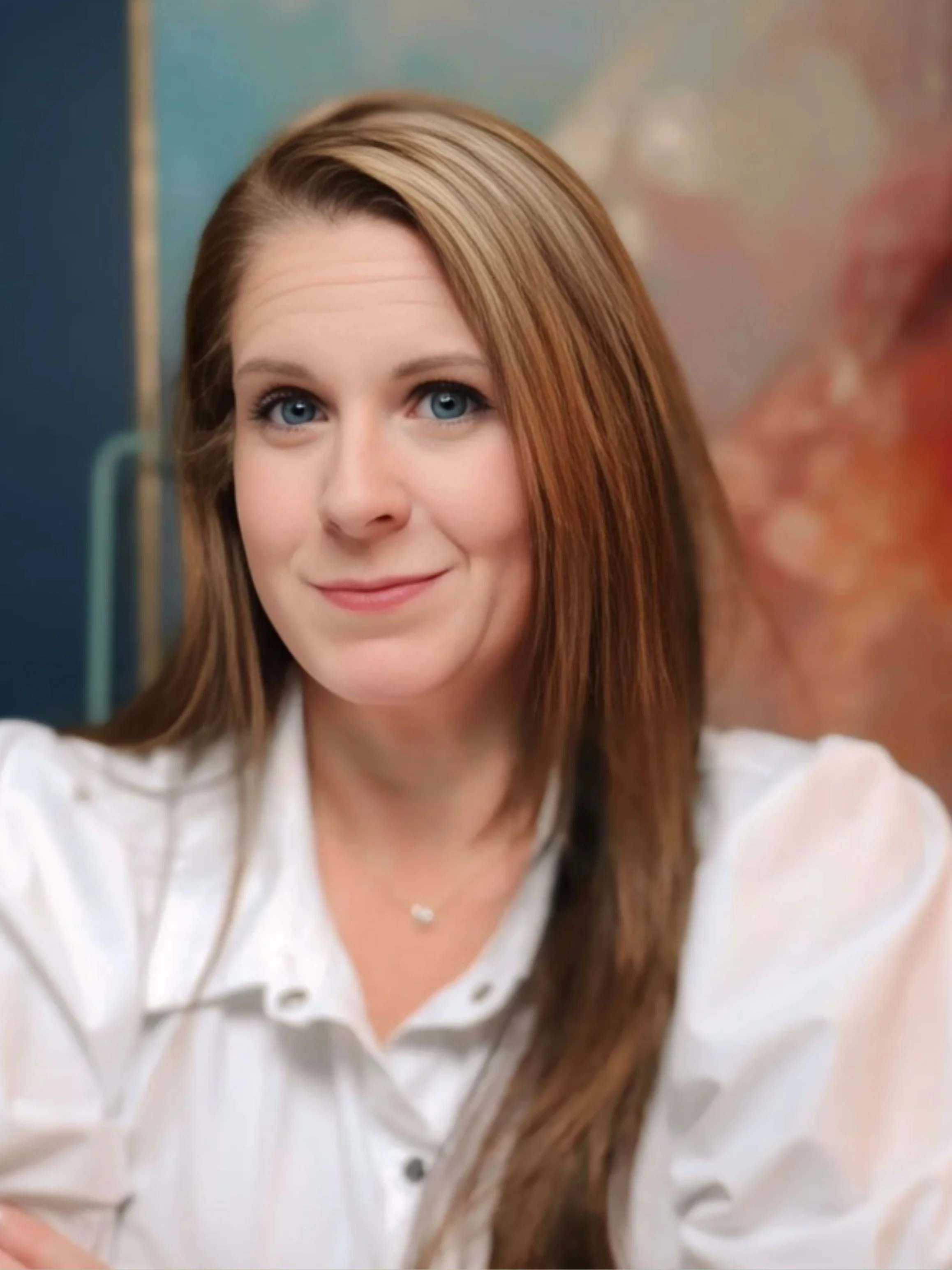
I’m honored to welcome Amber Hollingsworth to the podcast.
Amber is a master addiction counselor, founder of Hope For Families Recovery Center, and creator of the YouTube channel Put The Shovel Down.
With over two decades of experience, she has helped thousands of families navigate addiction recovery using innovative, relationship-focused strategies, including the Invisible Intervention. She is known for her relatable, no-nonsense approach.
Amber’s philosophy centers on empowerment and compassion. She believes people don’t need to hit rock bottom to recover and that recovery is about redirecting addictive energy toward positive, fulfilling life goals.
She emphasizes that individuals and families have the influence and strength to create lasting change through trust, safety, and a strengths-based approach, rather than relying on shame or control.
You will hear Amber talk about:
The true process of changing your drinking and where to begin by taking intentional breaks from alcohol
Early signs it may be time to rethink your drinking and what Amber calls “stage three”
Why moderation is so challenging, given how alcohol impacts brain chemistry and self-control
How to navigate what Amber describes as the bargaining stage to stay alcohol-free
What to expect in early sobriety and how to approach a break from drinking
The instincts family members have that can unintentionally hinder progress and what they can do to truly support a loved one
Amber offers hope, insight, and actionable tools for anyone facing change or supporting someone they love.
Hope For Families Recovery Center
Listen to the episode:
-
Hello, there I am Lori. Welcome to To 50 and Beyond. This is where we talk about aging and living alcohol free later in life. I'm so happy that you are here today. If you are new to the podcast, thank you so much for being here. Come on in, get comfy and if you're return back to the podcast. Thank you my friend, for coming on back.
I'm really honored to share my guest with you today. Amber Hollingsworth is here and she is a joy. You are going to hear an honest conversation about what it looks like to change your drinking, and then support for family members who are going through the process of this change with someone they love.
Amber is a master addiction counselor, founder of Hope for Families Recovery Center and creator of the YouTube channel. Put the shovel down. With over two decades of experience, she's helped thousands of families navigate addiction recovery, known for her relatable, no nonsense approach. Amber and empowers families to outsmart addiction, set healthy boundaries and rebuild.
Trust today, Amber is talking about that first step to take in changing your drinking. She talks about why moderation is tough for so many, how to recognize early signs that it might be time to make a shift. And then she talks about practical ways family members can offer support and what actually helps the person that's going through this change and what.
Doesn't. I really enjoyed meeting Amber and I knew that I would after watching several of her videos on YouTube. What I knew for sure about these topics is that midlife and beyond women need them right now. There's a lot of information out there and changing your drinking. We know is not an easy thing to do, and getting started is the hardest part.
And there's women out there whose families are urging them to get help, and there's families who are in that place of not knowing how to help. And so that's why Amber is here today and I can't wait to share this conversation with you. Here she is.
Hi, Amber. Hey Lori. Thanks for having me.
Thanks for being here. I'm excited for our conversation. Today. We're gonna talk about the process of change. We're gonna talk about getting support and asking for support from our family, and how to deal with when a family member is really asking you to quit drinking.
I know that is something that comes up with a lot of the women that I've worked with and that I hear from who are listening to us today. So I welcome you. I wanna kick off our conversation with what led you to the work that you are doing and can you talk about that work?
Yeah, sure. My route into this work is, is different than most people's.
I feel like most people get into recovery and then, and then they develop a passion for this work. I mean, naturally 'cause it's so life changing. But that's not how I landed here. I grew up in a very addicted family, as in. Aunts, uncles, cousins, my sister, my half sister parents. So I grew up in it and I would love to be able to say that that's why I ended up in the field, but it really isn't a.
I ended up in the field quite by accident actually, and I didn't even realize that my family was so addicted until I was already in the field. Because when you grow up and it's normal and you don't think anything, like, I don't have any memory of my grandmother who I loved to death without a glass of vodka in her hand.
Like I have zero memories of her without that and a cigarette. You know, I landed in it by accident, but sometimes you, you just know you're in the right place. And I, I absolutely love it, and I can talk more about how I sort of came to the philosophy that I have or got any good at it. It was a whole different story.
Yeah. What are some of your philosophies? Well. To break it down to basic, I think number one, people don't have to hit bottom in order to get better. I don't believe people are powerless. I feel like waiting for bottom is kind of dangerous actually. It's a bad move. It can, it can backfire on you in a lot of ways, especially if you're like the family member and you're trying to make someone hit a bottom that can blow up on you pretty big time, I think.
So some of my philosophies are a little different than maybe what you'd call like traditional or mainstream. Thought processes, and I don't even think that you're powerless to help someone else find recovery. I think there's a lot of things you can do to help support a loved one. Now, they're probably not the things that your instincts are telling you to do, but you're not powerless.
You have a lot of influence over helping yourself or helping someone else.
I appreciate that. What are the instincts when we wanna help somebody, what are we doing?
Naturally. This is someone you love and you care about. It's usually someone that's very close to you, like your partner or your child or your parent or your sister or brother.
And when someone you love seems to be headed for a cliff, you panic, you get scared. You want them to figure it out quickly and fix it basically. And so most of the mistakes family members make is about trying to. Speed up the process by just telling the person what the problem is and what they should do about it.
And it actually slows down the process of figuring it out. And sometimes too a screeching halt to be honest. And the the reason I know that is because after 20 years of working with people who have substance abuse problems, when their families are going about it that way, the only thing that the person can talk to me about.
Is their family member and how they're controlling or they're critical or nothing they ever do is good enough, and that's all they wanna talk about in therapy. I can't even get to the issue until the family dynamic gets fixed. And so after years and years and years of running into that, I just realized like, okay, I, I gotta have a system for helping the families.
'cause I know that they're doing the best they can. They're desperate, they're scared, they're all these things, all these. Emotions, but most of the things family members do end up not making things worse. It's not like they're causing the problem, but they slow down the process of getting better is the way I like to say it.
We're gonna find some solutions today. What I wanna talk to you about next is your YouTube channel. Your podcast, put the shovel down. I was just telling you before we started recording, I've started watching YouTube and it's not like I've never done it, but
i'm bored with TV and so I'm watching podcasts and when I started to watch your videos, I love everything about how you approach the conversation with compassion and realness you have a, large YouTube following.
Yeah, and it's also a podcast.
That's right. My main platform is YouTube. There's over a thousand videos there, I go live every Thursday at one Eastern. And those videos, I also put on the podcast platforms and, and I think if you're trying to find me, if you're more of a podcast listener, it's called Inside the Mind of an Addict.
You can find me on. Any of the podcast platforms, Spotify, apple, those kinds of things. But YouTube is where to find the majority of all my information and videos and work.
I wanna congratulate you on that. It is fantastic, and I didn't realize that you're doing the lives every Thursday. At one Eastern.
Mm-hmm.
I'll teach something for 20 or 30 minutes, and then the last half I take questions. So if people join live, you can hop on there and engage in the conversation, ask me about something, about yourself, about a loved one, so that we have, we have a dialogue and I can help.
That's fantastic. You're very comforting. Thank you. Thank
you. I try to be, tell me the meaning. How did you come up with, put the shovel down? Where did that come from?
Well, when I was first starting the YouTube channel, I think I just called it like addiction recovery resources, something, you know, just like basic.
I was having trouble building a YouTube audience, which looking back now, it didn't have anything to do with that. But my sister said, well, some people might not wanna subscribe to you because they might not want that on their feed. You're subscribed to something that says addiction. She said, you should name it 'cause she's techie.
So she says you should name it something that people kind of in that arena know what it means, but other people would just be like. Not even notice it. So that's when I decided on put the shovel down, which is a saying, a old recovery saying, and it's meant to say you hit your bottom when you put your shovel down.
Like you don't have to keep digging. You don't have to hit that rock bottom. You can decide any time you want to put your shovel down and get outta the hole and be done.
I really do appreciate your channel, and I'm gonna of course have it linked down below so everybody can go and watch your videos.
It's a very helpful resource to have if you don't already have it.
Okay. Let's talk about the true process of changing your drinking. Where do we start? What are the signs that it, it could be time to change your drinking?
Can we start there? Yes.
I feel like. Like I said, I don't, I don't like for people to wait until they absolutely have to drink every day, or they're waking up drinking or those classic signs, you know, they've lost everything. The earlier signs that it's a problem is just more like, I can't stop once I start, not even so much like I have to drink every day, or I get sick if I don't drink, but more like, you know, I tell myself I'm just gonna drink X amount, whatever, and then I pass that and then.
I regret it and sometimes I say and do things that I really feel bad about the next day, and then I make promises to myself and then I break my promises and then I make other rules and lines in the sand, and then I break those lines. Those are what I call like stage three signs of having a social abuse problem.
And that's the place to get ahold of it. Waiting until like you absolutely can't stop. I mean, of course if you're still alive, you're still in the game as far as I'm concerned, but. It's a lot easier if you stop before you get there.
Being proactive for sure, and I know that a lot of women who are listening to this podcast right now will understand that, and I definitely understand that.
You know, trying to cut back on my drinking, trying to moderate my drinking. There were so many promises and so many promises broken. Why is it so difficult? For somebody who is drinking to a place where, you know, they say maybe they're gonna start, I'm just gonna have one, right? Mm-hmm. I'm just gonna have one.
Mm-hmm. And then it ends up being more. And why can't we moderate our drinking for those of us who drink like that?
There's actually a, a few reasons for it with alcohol specifically, even more than some other drugs, is it turns off your off switch. So even though you have every full intention of only having, you know, two or three glasses or whatever it is, the part of your brain that allows you to.
Stop. You know, it's actually, I wouldn't say it turns it off, but it turns the volume way down. And the more you drink the, the softer that volume gets. So it impairs your ability to make the decision to stop for one. The other thing that happens when you drink is, and you, and you're used to drinking quite a bit, is your brain starts to go on autopilot with trying to counteract the alcohol.
So if you're used to drinking a bottle of. Whatever a day, then your brain automatically assumes when you take one drink that you're gonna drink a bottle. So it starts to produce all the neurochemicals to counterbalance the alcohol that you're about to drink. So you get flooded with this op opposing chemical called glutamate, which makes you feel kind of anxious, keyed up, panicky.
If you've had a drinking problem, you probably know what this feels like when you wake up in the morning and then you feel like your thoughts are racing. You may feel panicky. It's not a good feeling. It's like an energy, but not a good energy. It's an anxious energy, and so your brain starts to produce that in the amount that it thinks you're gonna drink, and it doesn't get the memo necessarily that you're not gonna drink that much tonight.
So it automatically shifts into autopilot, and that also makes it very difficult to control. So that combined with the off switch being deactivated, you have a bad formula. So no matter. How much you intend. You know, most of the people I know, it's, they're totally serious. It's not like they're being dishonest, not even with themselves.
They really mean it. It's just sort of the biology of how it works gets in their way.
When somebody comes to you, are they coming to you and saying, I am ready? Are you hearing that more? Or it's an outside, maybe a family member that is saying, I need to stop drinking.
For almost all of my career, it has been 95% of people come in because they're being leveraged in by a family member or some other external reason.
You know, maybe they have a legal issue or something like that. So they come in. Very reluctant, I guess I would say, and skeptical about the process. And luckily for me, because I've dealt with that for so long, it doesn't bother me at all and, and sometimes people will even say things like, well, you have to want it for yourself, or you have to be a hundred percent ready.
And I'm like, none of that is true at all. When someone isn't sure, I usually encourage them to do an experiment and just try sobriety for. At least 30 days, 60 would be better, but at least 30, because the first couple weeks you won't feel better, you'll feel worse. But once you get to about 30 days, you actually start to feel a lot better.
And then you're like, you know what, maybe, maybe I do wanna get sober. Maybe it is better over here. And so if you're not sure. Just give yourself some time just to see what it's like. Now, go into that with an open mind. You don't have to go into that with a, let me just be objective here and see what this process is really like and, and how does it affect my life in good ways and, and in difficult ways.
I like that. So the first step to changing your drinking. You recommend taking a break. From drinking, give yourself a different perspective. 'cause it's so difficult to really figure out your drinking while you're drinking, right?
If you haven't done that yet. I think that that's the first step.
A lot of times people come to me, they've already done a lot of that. They've taken, you know, like they've hit some kind of bottom, so they stop drinking for three months or sometimes even like a year or more, and then they go back to it. So if you haven't had enough. Completely sober time to really feel what it's like to be on that side of the fence.
Then I encourage you to do that first, because what's gonna happen is you're gonna learn that you really do feel so much better. Your motivation is better, your anxiety is less, your sleep is better, your energy, all that stuff really improves, and then at least you have a good. Baseline on what it's really like, because if you're just staying sober for a few days or a week or so at a time, you probably think sobriety is horrible and that that's because your experience with that really isn't what it's like to be sober.
It's what it's like to be in withdrawal. Now, you may not recognize that withdrawal because you may not be like in severe dts, need to go to the hospital, but you, what you're not recognizing is your anxiety's up. You're gonna be irritable, your sleep's gonna be crappy, all the things as your body and your brain regulates.
So you may think. Just the idea of living sober sounds horrible. Like I don't even wanna live because what you're really imagining is what it's like to be sober for a few days, which really is a withdrawal. So that's why you have to get past that to get a good feel for it. What's it really like?
Yeah. So that would be the first step is to take that break.
Then I wanna ask you, because so many women do go back and forth and they take the breaks and they feel better, and I remember thinking to myself, I feel good. Right? And it was just that reminder. Okay. I think it's because you're stopped drinking. You're not drinking alcohol anymore. So you know, the romanticism starts to come in.
Well, maybe I can have just a little bit, what do you say to our friends out there? So common?
Almost like now I've proved to myself. I don't have an alcohol problem because I quit drinking, and you know, we, we get far enough away from it.
We kind of laugh at that because it, it sounds silly, but it is part of the process. And what happens is, is we move back into what I call, I call it the bargaining stage, which is maybe I could drink differently, I could drink less, I could drink socially, I could drink just on occasion. I could keep it to.
Whatever, you know, just beer and not liquor, just the weekends, something like that. We move back into that bargaining phase and we think, I'm gonna bring this back into my life. I just don't want it to go back to the way it was. And that almost always happens after one of these trial periods. And that's okay in my mind because it's a learning process.
So when that happens, it pretty much goes back to exactly the way it was. Quicker than you could even imagine, usually within a week, honestly. And so now we've got a really good picture of what it's like over here and what it's like over here. And eventually what most of the people that see me end up figuring out on their own is that it's just so much easier to drink, none than to drink a little.
Drinking a little. It's really the worst place to be because it's not very fun if you're able to manage it, that's if you're able to do it, it's not fun and it takes a lot of energy and you have to constantly be thinking about it and making all these promises and rules and setting up all these crazy systems for yourself.
That's where I was too. It felt very deprivational to drink less and to have the rules 'cause I kept breaking them. I just had that inkling, maybe it's better to drink none, what I wanna know next is do you have a question that somebody can really ask themselves if they're at, I call it the crossroads, right?
Like they've been there for a while. They've been there and they've experienced the break, and they know exactly what it's like to take the road back to alcohol. Is there something that they could reflect on at that stage to help them either move forward with alcohol or move forward without it and be done?
Mm-hmm. I,
I feel like most people, once they get to that stage, they know that they don't wanna drink the way. They've been drinking in some kind of problematic way. The question is, is whether or not I can manage it is where people get stuck, whether or not I can drink differently. And so they're trying to figure out a system or a way to drink differently, and it's difficult to wrap your head around because it works sometimes.
It's more like, it's not like it never works it, it can work and it does work. Sometimes it just doesn't work consistently. I say it's like Russian Roulettes, like you may do really good with your system for a while, but you don't know when the dam is gonna break. And when it does break, it breaks big time and not great things happen.
And then you're back in that cycle of. Feeling bad about yourself and being mad at yourself, and it's just a whole terrible, awful cycle that anyone that's there, you know exactly what that's like for you. So the question is, is can I manage it? But do I wanna manage it? Like how much energy and time does it really take me to do that?
What does two drinks do for me? I mean, if you, if you're to the point where you feel like your drinking is a problem, two drinks probably isn't going to do much for you tolerance wise, other than make it really difficult because it starts, your cravings is all it does. And so it's about do you really want to manage it?
Not so much can I? But do Do you really want to?
And could I manage it? Is that sustainable? Looking at expectations going into this change, what would you, what would you tell somebody in their first 30 days? Is there something to expect? Because I think a lot of us just have a misconception around what to expect.
Well, I think in those, the, the first week is really crummy. You probably physically feel not great. Even if you're not drinking to the point to need to go to detox, you're just not gonna feel good. The second week. You're gonna feel really emotionally up and down. The, the two weeks that follow that you start to feel a little bit better day by day.
And by the time you get to day 30, you know, you'll, you'll find yourself like laughing at something and you're like, okay, I might can do this. You know, I might be a human again. And then after that, it gets better and better. And once you get like three months out, you feel significantly better. Once you get six months out,
you feel like a different person. And once you get a year out, , it's hard for you to even remember, imagine back living the way that you did. 'cause you're like, that was so horrible. I don't even know how I'd t that, you know? It's like you feel completely different. You think different about everything.
Your energy's different about everything. You feel different about yourself. It's not just, I feel different about drinking. You feel different about everything and. It's not that hard. So the whole thing about managing it is if you stop completely, eventually it stops being hard. If you continue to try to manage it, it will always be hard.
You'll always be craving, you'll always want more. And if you just stop completely, it's hard for a little while, but then. You feel so much better. You really don't miss it. And when you see other people drink, this is a moment you'll have and you'll know like, oh my gosh, I had the moment where you look at other people drinking and you have this shift from feeling like you're missing out and you actually feel sorry for the person you're looking at because you feel like you've like.
Found the secret to the universe and you're like thinking, oh my gosh, I know how they're gonna feel the next day. I remember that. And you don't have that like missing it feeling anymore. You have this gratitude feeling. And once you have that heart shift, everything changes.
So if you're looking at the true process of change, how do you describe it? When it comes to changing your drinking,
well, let's start with saying, one of the things I like about, I was listening to a lot of your podcast episodes and one of the things I like is 'cause you keep your journal.
Because I feel like when you meet a lot of people in recovery, they remember it wrong. When you hear people in recovery, they've had a lot of, they tell their story different than it really happens. 'cause they're like, well I just got sick and tired of it and I just hit this bottom and I just decided I was done.
Now I've been on the front end of this for a lot of years and that's not really the way it goes down. And sometimes I'll even hear people's share their story like that, that I was there for and I'm like, Hmm, there's a lot of. Ambivalence back and forth. There's a lot of uncertainty. There's a lot of, I'm not sure, I don't know a hundred percent if I wanna do this.
And it really is more of a slow, gradual awakening. And the longer you do it. The stronger you feel about it and the more sure you feel about it. But so many people wait until they have that sureness thinking, well, I'm not a hundred percent sure, but that feeling actually comes later after you've started the process.
So it's like behavior before feeling rather than waiting for the right feeling to show up. That's what I would tell people is just do the thing and then see if the feeling follows.
It's such a good reminder in so many things that we do. It's just like, let me try it out and like you said, you know, experiment and mm-hmm.
Practice with it. I get the timelines that we're looking at. Do it for a hundred days, whatever. What do you say to that as far as like, I know, you know, you talk about the practice for sure. Mm-hmm. Maybe offer us
some hope. That's the one word. Hope is so good. I think what you're asking me, Lori, is like, when does it get better or when does it get easier?
And to be honest, it gets better and easier the moment you have the mindset shift. It's a change of heart. It's not an amount of days now. I hate it when I hear people say this, and it's true technically. Like you can have post-acute withdrawal all the way up to a year and that makes people freak out.
'cause they're like, I'm not gonna feel better for a year. I'm like, okay. So then like that can happen. You may feel like your memory's not exactly, or something like that, but it's not like it's hard every day for a year. Once you have the heart shift of, you know what, I'm, I'm done with this and I'm not just.
Restricting myself. I'm not just waiting until when I encourage the trial error, so you can see what it's like to be sober, but that doesn't keep people sober, but that gives 'em a taste. But once you have a shift of, okay, I'm really doing this, then you allow yourself to see the world differently. You allow those.
Filters your lenses to change on how you're looking at the world, and you shift from, I'm missing it to, okay, this is my new me, this is my new life. I've had people that have that on day one. I've had people that have that on day 90. I have people that have that six months in. But it's, it's the moment you decide to look at the situation differently, you'll experience it all differently.
And if somebody was to say, I'm gonna give it a hundred days, what do they do when they get to 101 days? What is a good suggestion after that?
I don't know so much if I would say it's after that. It's during that in my mind. Okay. This is what I mean when I say the mindset shift because.
Requires a lot of self-honesty, and so you gotta ask yourself, what am I doing with this a hundred days? If you're truly just experimenting, then that's what I mean. I want you to experiment with an open mind and don't experiment trying to prove to yourself how. Life sucks. Without it, you find what you're looking for.
And so during that a hundred days, I want you to look at the situation with an open mind and follow, Lori's advice with like the journal. Write down how am I feeling each day, the pros and cons so that you're looking at it objectively. 'cause so many times when people do it, they're trying to prove to themselves that they don't have a problem.
And so once that a hundred days hits or whatever the. Milestone is, then it's like it's on, or even like dry January, you see this kind of thing happen or they're trying to prove to someone else and then they go back because they never really intended to have a change of heart. It was more just a test to prove to themself the answer that they wanted to find.
So it's during the a hundred days, you need to make sure you're looking at what's happening objectively. That's what's gonna determine what happens after the a hundred days. Thank you for sharing that.
The journaling is so helpful because then you know what is happening and you don't have to journal a ton, but just writing it down, documenting it, and talking to yourself through those journal pages.
Mm-hmm. A very helpful tool. Can you talk about the systems that you have set up for family members of somebody who is dealing with addiction?
Sure. The whole dealing with the family thing came from. When you deal with people who have addictions who are usually leveraged in, like I said, they come in not sure about what they wanna do about it, and sometimes just downright mad about the fact that they're talking to you.
You realize that the families are doing a lot of things that aren't very helpful. Like I said, not on purpose. They're very natural and instinctual. The things that families are doing, they're just not that helpful. The other thing that was happening to me a lot was I would get a lot of phone calls of, I want my loved one to come see you, but I can't get them.
To do it, or they don't think they have a problem or they don't think they need help or whatever. And so I spent a lot of time coaching families on what to do to get someone in a state where they might be open-minded to talk to me or someone else, you know, it doesn't have to be me to get someone into.
Even like a contemplative stage of change. And there are a lot of things that you can do, and what I find is that deep down inside of a person, there's a part of them that wants to change already. Even if on the outside what they're telling their family and friends is, you know, I'll never stop. And I love it.
Some people wear it like a cape, you know, like it's their identity. They brag about it. You know, I can drink you under the table. It's their whole persona sometimes, but even inside of those people, there's a piece of them inside that does not like something about it. It's actually usually a fairly good size piece of them.
And if you as a loved one can, find that piece, which is gonna require you making a person feel safe enough to show you that piece, then you can nurture that part of them that actually is already there and wants to change. You know, you hear, you can't make someone change, which is true, but you can influence them to change.
And the way you do that is you allow them to influence themselves. So you. Create enough safety in a relationship that they're able to talk to you about it openly and honestly. And it's kind of like the journaling thing. If they're talking out loud, it's, they're learning from it. And they'll start to be more honest with their pros and cons list and they'll figure it out so much faster.
So a lot of what we do. Our practice and and on the YouTube channel is teach families how to interact with someone in a way that helps the person come to the conclusion themselves, not to force them, not to try to push them out of denial or force them into getting help, but how to help a person move along.
Their process because it's kind of a grieving process and to have empathy and understanding for the fact that they are gonna bargain and not to get upset when someone's trying to cut it back. It doesn't mean that they're not trying, it doesn't mean that they're being manipulative. It's a learning process and if the more you can tolerate that, the more you can actually help someone move through those stages faster.
And I'm thinking of the people who will say, you know, I don't like being told what to do.
No one likes to be told what to do. Like if you're more than two years old, you don't like to be told what to do. You know, some of us outwardly respond to it better than others of us, but none of us like it.
Yeah. It's the feedback that we're getting. It's tough to take in, especially around something so sensitive as alcohol and our drinking. Gimme, can you gimme an example of like what family member can do? Let's say the family was, you know, this has been going on for a while and saying, you know, you have to do this.
You, you have to go into a facility. You have to do X, Y, Z, and sending a bunch of articles and stuff. Oh my gosh. Like really, really? Yes. Like I, I know somebody. And so how can they just maybe push the reset button and step back and what would be that first step for them to help?
Well, what happens is they want the person to figure it out quickly, and it really is the trying to make it happen too fast that gets in the way.
And so when a person is drinking or any other substance for that matter, it does something for them. Legitimately, it's helping them in some way and, and they've probably tried to express that to you before. Like it helps me with my anxiety or it helps me de-stress at the end of the day, or especially if it's a woman.
A lot of times for women it's like it's my only me thing. Like a lot of women, they do. Everything for everyone else all the time, and they truly feel like it's my only thing that's just for me and, and why are you trying to take that away from me? And those are legitimate. And instead of trying to fight against it and say Yeah, but yeah, but yeah, but just acknowledge it.
Just say, yeah, I could definitely see why, you know you're raising kids and you go, go, go all day long and I think it's totally normal to want some at just. It's not like you're saying, I think what you're doing is okay, but you can acknowledge the points that they have that are valid.
What happens when you do that is it allows someone to take their guard down because they feel more seen and heard, and they don't feel pushed, and they'll actually open up and be a lot more honest. Like for example, if you're dealing with a mom and the mom is saying, you know, this is my only me time and I do this and that.
If you just say that to them. Yeah. I totally get it. Like I don't blame you at all. Like you're stressed out. You give, give, give all the things, whatever it is that they're saying, they'll actually immediately have the thought if you just say what they would say. Yeah. They'll have the Yeah. But thought themselves.
Yeah. But I feel crappy the next day. Yeah. But I know it's really making me feel more stressed. If you'll say what they're already trying to make you here, they'll do the, yeah. Butting themselves. And that's what I mean when I say, when you can interact with someone in a way, you can speed the process up and they feel like you're there with them and they're on their journey.
The other thing you can do is, people that are struggling with this feel very defensive and they feel like their family only sees this one negative thing about them. And it feels very frustrating because they do so many other things and so many other parts to who they are. But their family's just so preoccupied with this one thing.
One thing you can do is, be open and honest and acknowledge all the other things. That makes someone feel like you're more objective, like you see who they are and even acknowledge your own shortcomings. So when you can acknowledge. The full spectrum of pros and cons. You have so much more credibility with someone when you're very one sided and you're trying to force them to see a situation a certain way and you're not looking at the big picture.
You lose all credibility and then what you say, even if they know they, that you love them, and even if they know you're coming from a caring place, they just don't trust it. I usually say like, you may love your grandma, but you may not follow her advice if you think she doesn't really get your situation.
You have to really get someone's situation for them to trust you enough to be able to think about solving the problem, because it could drive the drinking for
sure.
Right?
Approaching this conversation for a family member, what is the best time to do it?
I think the best time to do it is wait till they bring it up. They will have moments along the way where I call 'em little moments of clarity where they drink too much or they have a regret, or you know, they're saying, you know what?
I really gotta cut it back. Those are the moments to not talk at them, but to actually listen and ask questions that just pull that thing forward that they're already trying to give you. As far as like if they're sober or not, I mean, you certainly don't wanna try to talk to someone about their drinking when they're really intoxicated.
That never works. But even when they are sober, like the next day or something like that, they still might not be in the right frame of mind because they could be hungover. They could be feeling bad, they could be angry, they could be craving any number of things. So they're not really in much better state of mind necessarily just because they're not drinking at that moment, especially if they're really caught in the cycle of drinking.
Wait until you get. A window that is open. And then when they hand you that seed, which they will do, just respond with empathy and listen and ask questions about, well, what's making you feel that way? What do you think would be helpful? What have you tried before? Like, you're asking these questions that make them find the answers that they're looking for.
So you, wait till the moment and then you, you kind of are sitting there ready and then you know how to pull it forward when you see it.
I love that it's compassionate and I know for a lot of people it's a difficult thing to do, especially if they've been dealing with it for a while. What are some resources for family members that you offer and do you work with people virtually?
Yes. We're almost all virtual. We still have some people that are local that come in to see us, but we're almost all virtual these days. We have a online program that we call the Invisible Intervention. If you're trying to get through to someone who has an addiction, and it's called Invisible Intervention because it's not like you see on tv, the person doesn't usually know whatever happened.
It's behind the scenes and it teaches you a lot more step-by-step. Some of these principles that we've been talking about, we have. Coaches that deal with just family members. I usually in the office deal specifically with the person who has a substance abuse problem. And I deal with it from a strengths-based perspective.
And so we look at what's right with you, not what's wrong with you, and we identify what your superpowers are. We try to point 'em in the right direction. 'cause usually the thing about you that makes you great is also the thing that can tear you down. And it's about harnessing that energy so that's the way I go about it.
Beautiful. I'm of course gonna have your information again in the show notes.. Can you think of anything else that you would like to share on these topics ?
I just want everyone to know that you're not powerless.
You don't have to decide at all at once, and it is a learning process and you will figure it out as long as you're open and honest with yourself. You'll figure it out. You'll figure out what works for you.
This conversation is gonna help so many people. Do you have specific videos, and you don't have to tell me now, but specific videos that will be helpful for this episode that I can link below?
Yeah. I have a playlist specifically about alcohol and I even have a couple of videos about like how to quit drinking on your own, which is a good place to start when people are. Trying to figure out, you know, and they don't wanna go to treatment or don't need to go to treatment, you know, not everyone needs to go to treatment about how to go about doing that.
Okay. I'll link those down below. Thank you for being here.
I appreciate it.
Thanks, Amber.
Thank you again for listening today. Amber's information will be down in the show notes. I found her playlist on YouTube, so you can click right there if you wanna look at some of her videos right now, immediately after following this episode, and I'll see you next week with a brand new episode. To check out more information about my coaching and my community team alcohol free, visit lorimassicot.com.
Take care of yourself this week, my friend. Peace.

Hey, there! I’m Lori, the host of the To 50 and Beyond podcast.
Where aging and living alcohol-free is an advantage, not a limitation.
To 50 and Beyond is about self-discovery, aging well on your terms, and designing an alcohol-free life that alcohol doesn’t stand a chance against.
I’m with you.
Did you enjoy the episode?
If you found this episode helpful, I’d love it if you’d take a minute to leave a review on Apple Podcasts.
Your review is greatly appreciated and helps another woman who is searching for support in living alcohol-free later in life.
Make sure to follow along on Apple and Spotify so you can listen to new episodes coming your way.
Thank you! ✌🏻
.